Factors to consider when buying security camera systems for businesses
Factors to consider when buying security camera systems for businesses

For any business, ensuring the safety of office premises is of paramount importance. This is where security camera systems come into the picture. They help monitor daily operations, prevent theft, and provide valuable evidence in the event of incidents. However, not all security camera systems are the same. Choosing the right setup requires careful consideration, as different features serve different business needs. Understanding their features can help ensure the surveillance system delivers reliable protection without unnecessary costs.

The type of cameras

Setting up CCTV surveillance for business starts with choosing the right camera. Some of the options include bullet cameras, dome cameras, and PTZ cameras. Bullet cameras are usually cylindrical or cuboidal. They offer long-range viewing, making them ideal for surveilling outdoor areas, entrances, parking lots, and perimeter monitoring. But the main advantage that sets bullet cameras apart is their clear visibility, owing to their size. So in a way, they serve as warnings and possible deterrents to miscreants.

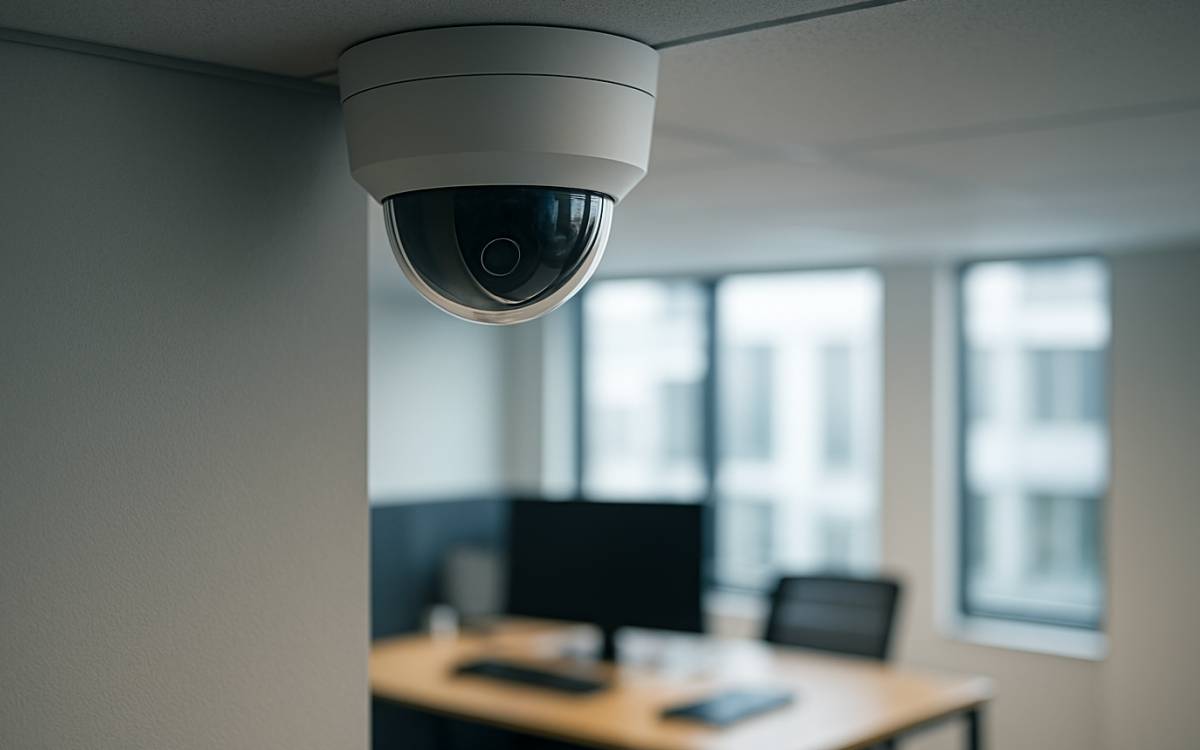
Dome cameras, on the other hand, are more discreet and harder to notice at a glance. Plus, due to their shape, they offer a wide viewing range and a high degree of flexibility. So one can rotate the position of the lens to capture footage across a wider area. And their shape makes it difficult for subjects to tell which direction the camera is facing, giving them a slight edge in surveillance.

PTZ cameras, short for pan-tilt-zoom, offer even greater control. These cameras can rotate, tilt, and zoom in on specific areas, allowing detailed monitoring across large spaces. These types of cameras are often used in warehouses, large retail floors, or open premises where flexible coverage is required.

The image resolution

The effectiveness of a security system largely depends on the type of camera used and the quality of images it produces. While higher-resolution cameras may require a larger investment, they provide clearer footage, making it easier to identify faces, read license plates, and notice important details that may not be produced by local, cheap systems.

Security cameras are usually available with SD, HD, or 4K resolution. For office security solutions, businesses should consider 1080p HD as the minimum standard. However, for clearer footage and sharper images that allow finer details to be viewed, the right choice should be security cameras with 4K resolution.

Remote access

One of the most essential features that commercial video surveillance cameras must have is remote access. With this feature, business owners or security managers can view live feeds and access recorded videos of their premises at any given time, from any location. This eliminates the need for them to be physically present in the office to access the recorded footage. That said, the surveillance system must also have proper authorization controls in place. This ensures that only authorized personnel can view or manage the footage.

Cloud storage

Cloud storage for surveillance systems simplifies the process significantly. Businesses no longer need to rely on physical storage devices to save their recorded footage, eliminating concerns about theft or damage to these devices. Additionally, they won’t have to invest in new storage solutions every time their current devices reach capacity. Cloud-based video monitoring systems also allow authorized individuals to access footage from anywhere with an internet connection, improving convenience and flexibility.

Top security camera systems for businesses

Arlo Ultra 2

This security surveillance system comes with three cameras, offering 4K resolution and a 130-degree field of view. The cameras also include integrated spotlights and offer cloud storage, with an additional subscription fee.

Eufy

The Eufy 4G LTE Cam is a single 4K security camera that offers a complete 360-degree field of view with a tracking feature. Users can also opt for cloud storage, which will cost extra for the subscription.


Most Popular

Top Bitcoin buying options and investment tips

Top Bitcoin buying options and investment tips

Cryptocurrencies are a popular choice among investors for many reasons. They help diversify portfolios, ensuring investments remain stable even during periods of heavy market volatility. Plus, investors can easily access them around the clock, even if they do not have access to traditional banking. But despite these benefits, cryptocurrencies like Bitcoin pose risks. Following certain tips can help investors build a stable, diverse, and consistently growing cryptocurrency portfolio. How to invest in Bitcoin Online cryptocurrency exchanges Investors, especially beginners, often use online cryptocurrency exchanges to invest in Bitcoin. This is because they offer the easiest way to purchase Bitcoin using different payment methods and currencies, flexible trading options, reliable customer service, varying fees, and consumer protection measures.  Traditional stockbrokers Some stockbrokers allow Bitcoin purchases alongside stocks. Traditional brokers offer investors a simple process for buying Bitcoin, affordable fees, and a familiar investing platform that many users already use for stocks, but with fewer coins available, fewer crypto features, and fewer withdrawal options. Some brokers that offer Bitcoin include M1 Finance, Fidelity, Public, TastyTrade, eToro, Interactive Brokers, Moomoo, Robinhood, and Webull. Bitcoin wallets and wallet apps These wallets store cryptocurrencies securely and often allow investors to make in-app purchases through service partners.
Top fund and portfolio management strategies

Top fund and portfolio management strategies

Fund management involves professional oversight of all investments through mutual funds, ETFs, and diversified portfolios. Here, oversight means monitoring, evaluating, and supervising various investments to maintain a proper balance between risks, market crashes, and optimal returns. To maximize the best outcomes for these investments, investors can explore different approaches and proven strategies. By following these approaches and/or hiring reliable fund management services (if necessary), investors can improve their portfolio’s steady growth. Fund management investment strategies Active vs. passive management Investors can choose between active and passive approaches to achieve returns on their investments. With active management, there is more of a hands-on approach with fund managers actively selecting securities. They also time the entries and exits of investments based on research, economic forecasts, and market trends. The goal is to get returns that are more than the specified market benchmarks. In this strategy, stocks are chosen in sectors like undervalued small-caps or growth tech. Meanwhile, passive management keeps track of indices like the S&P 500 via ETFs (exchange-traded funds) or index funds. This is done to minimize trading, enabling market performance to be replicated at low cost. Active strategies are suitable for volatile markets where skilled supervision by fund managers can take advantage of market opportunities.
A Definitive Guide to Hiring an Asset Management Company

A Definitive Guide to Hiring an Asset Management Company

Building wealth and earning profit are the primary goals of many individuals. However, managing the accumulated wealth and earnings is another significant aspect one should consider while planning finances at the outset, as well as when one begins earning profits. Asset management is the long-term process of maintaining and trading investments by assessing risks, figuring out new opportunities, and setting concrete financial goals. Here’s everything one should know about hiring an asset management company: Functions of an Asset Management Company Portfolio Maintenance An asset management company’s primary responsibility is to organize their clients’ portfolios by investing in a wide range of securities and closely monitoring each based on carefully considering the client’s financial goals, current earnings, expected profits, and risk tolerance. Creating and maintaining a portfolio based on such factors is essential to ensure sustained, long-term profits and minimal risks. Market Analysis A market analysis is essential to understand the current market trends and predicted market performance and fluctuations and analyze one’s risks accordingly. While such information may be available over the internet, asset management companies offer expertise in actively interpreting existing and expected trends and helping mitigate risks effectively. Development of a Financial Strategy Another essential role of asset management companies is to come up with a financial strategy to maximize one’s wealth systematically based on various factors, including the current socioeconomic conditions, possible fluctuations, and risks and returns expected.
Read More